Home › Blog › Squawk of the Week No. 002
Brand-new house. Fresh carpet. That new-house smell. Builder walkthrough on the calendar, closing a week out. Everybody’s happy.
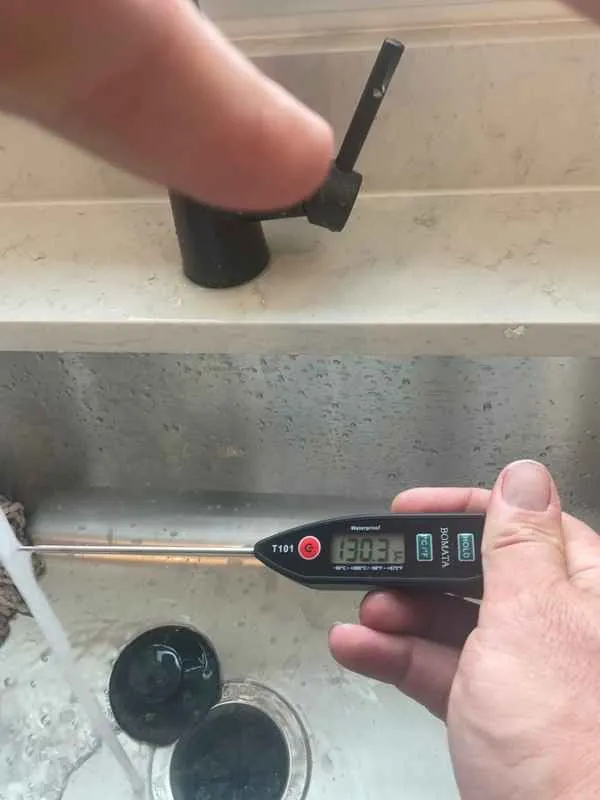
Then I put a probe thermometer under the kitchen faucet. 130.3°F.
First, what’s a squawk?
In aviation, a squawk is a write-up for something wrong with the aircraft. It doesn’t fly until it’s fixed and a QA inspector signs off. I spent years signing those off on Coast Guard aircraft. Now I write them up on houses. Every week I pull one from a real inspection and post it here. No names, no addresses, no sugarcoating.
The discrepancy
New construction final inspection in Washington Township. Hot water at the kitchen sink came in at 130.3°F. Nothing’s broken. The water heater is just set hotter than it should be. That happens on new builds more than you’d think. Somebody sets it during construction, nobody checks it at a faucet, and the keys get handed over.
Why it’s red on my report
Because it burns people. Burn-safety charts put it at about 30 seconds for hot water at 130°F to cause a serious burn on adult skin. A little kid’s skin is thinner, so it happens faster. Drop it to 120°F and that window stretches to around five minutes. Ten degrees. That’s the whole ballgame.
So 120°F is the number I hold every house to, built last month or built in 1926. I don’t care how nice the countertops are. If the tap can scald a toddler at bath time, it goes in the report as a safety item.
The fix
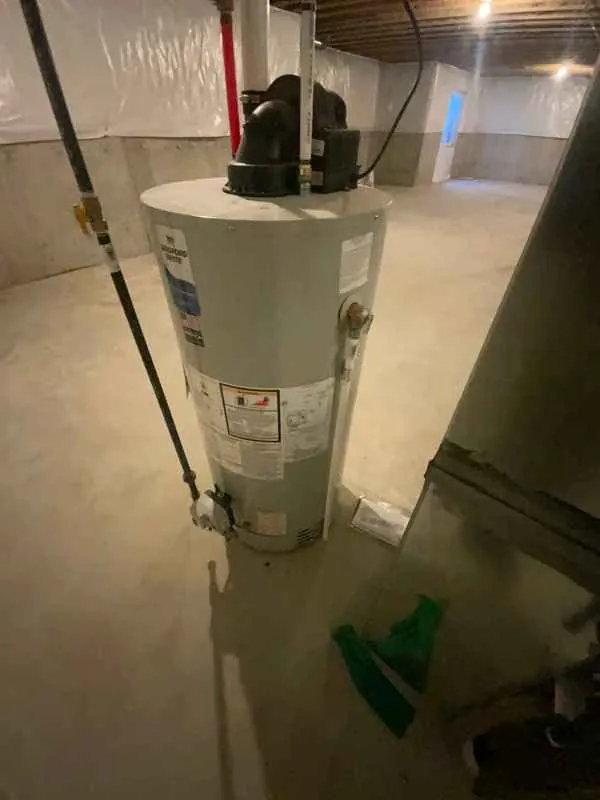
The builder turns the water heater down and rechecks it at a faucet. No parts. No drama. And because I caught it before closing, it went on the builder correction list. That makes it the builder’s to fix, on the builder’s time.
Already living in your house? Check yours tonight. Run the hot water at the faucet farthest from the water heater for a couple minutes and hold a kitchen thermometer in the stream. Over 120°F? Follow the instructions on your water heater’s label to turn it down, or call a plumber if you’re not comfortable doing it. Give it a few hours and check again.
Same house, same day: two more red ones
- Every smoke/CO alarm still had its construction dust cover on. Those covers keep drywall dust out during the build. They also keep smoke and carbon monoxide out. An alarm that can’t smell smoke is a ceiling decoration.
- The door from the garage into the house was cracked at the lock, and it wouldn’t close on its own. That door is part of the fire separation between your cars and your bedrooms. It’s supposed to swing shut by itself. A crack at the lock isn’t something you putty and paint over. That door slab gets replaced.
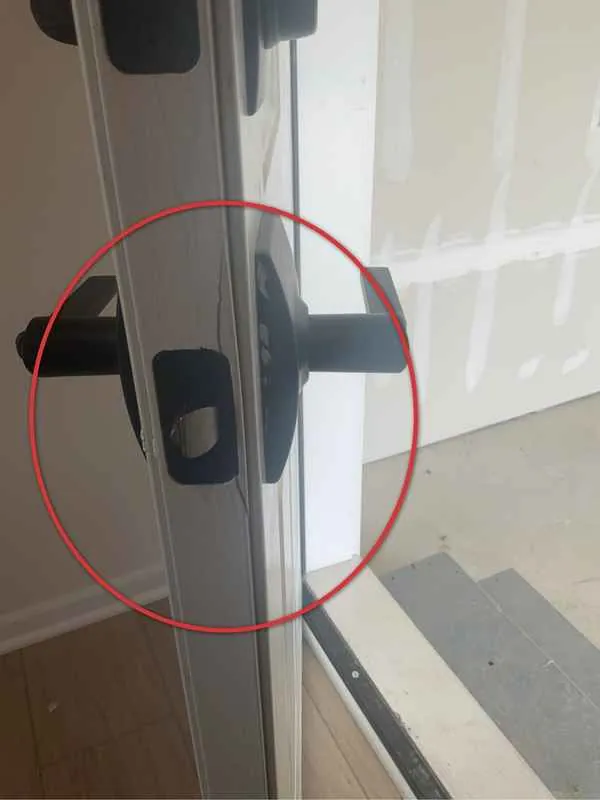
Three items. None of them glamorous. All three could hurt somebody. That’s the stuff I care about most, and it’s exactly the stuff that slides through when everybody assumes “new” means “done.”
“It’s brand new. Why would I need an inspection?”
I hear it every week. Here’s my answer. The city inspector checks code minimums, on a tight schedule, across a lot of houses that day. The builder’s walkthrough is the builder grading their own homework. I work for you, and I give your house all day if it needs it.
New doesn’t mean done. It means nobody’s lived there long enough to find out.
Building or buying new in Macomb or Oakland County?
Book your new construction final inspection a day or two before the builder walkthrough so you walk in with the list. Final inspection from $349. Pre-drywall $249. 11-month warranty inspection $349. Drone roof flight, attic camera and FLIR thermal scan on every one.
— KyleKyle Winn · Owner & Inspector · PreFlight Home Inspections · 586-522-8733