A recent buyer inspection in Southfield: 48-hour continuous radon test, average of 7.1 pCi/L. The EPA action level is 4.0. Nothing about that house looked or smelled any different from the one next door.
That’s radon. The only way to know is to test.
What radon is
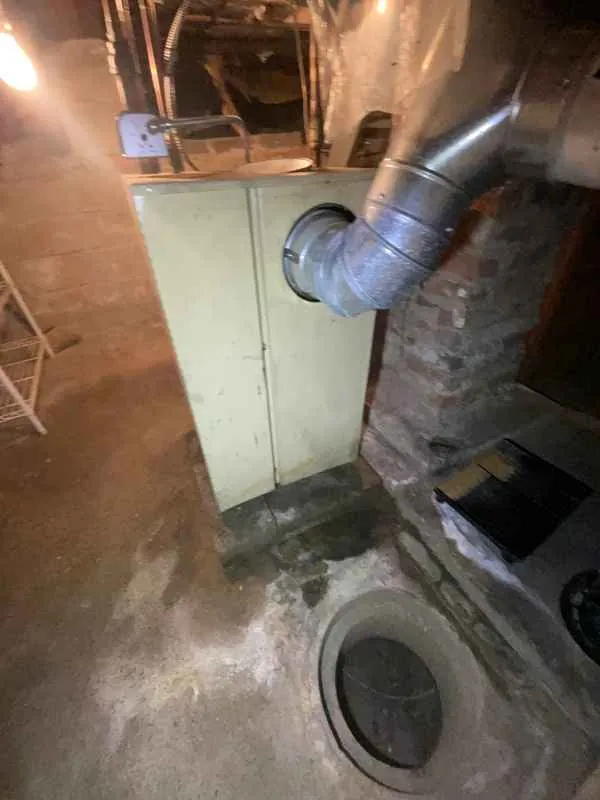
Radon is a radioactive gas that comes from the natural breakdown of uranium in soil and rock. It moves up through the ground and gets into houses through cracks, sump pits, floor drains and gaps around pipes. Basements are the front door. Long-term exposure is a leading cause of lung cancer, which is why the EPA says to fix a home at or above 4.0 pCi/L.
It doesn’t care if the house is new or old, finished or unfinished. Two houses on the same street can test completely differently.
How my test works
- A continuous radon monitor runs for at least 48 hours in the lowest livable level of the house, logging readings the whole time.
- Closed-house conditions. Windows and outside doors closed for 12 hours before and during the test, except normal coming and going.
- You get the data, not just a number: the average plus the readings over time, attached to your report.
I’m an InterNACHI® Advanced Radon Measurement Service Provider, with 73 hours of radon training. I test. I don’t sell mitigation systems, so I have no reason to want a high number.
Why winter testing works so well
Closed-house conditions are the hardest part of a summer test. Somebody always opens a window. In a Michigan winter, the house is already closed up. Warm air rising inside the house also pulls air (and radon) up from the soil, which is part of why levels often run higher in the colder months. A winter test is a good look at the house at its worst, which is what you want to know.
If it comes back high
Don’t panic. Radon is one of the most fixable problems a house can have. A licensed radon mitigation contractor installs a system that pulls soil gas from under the house and vents it outside. Then you retest to confirm the level dropped below 4.0. In the Southfield report, that’s exactly what I recommended: mitigation by a licensed contractor, then a post-mitigation retest.
What a system costs and who pays for it is a conversation for your agent. My job is to get you an accurate number.
Already own your house?
If you’ve never tested, winter’s the time. Same 48-hour test, same report.
Test before you buy
Radon testing is $175 added to any inspection, or $225 on its own. The Complete Inspection bundles a buyer inspection, a 48-hour radon test and a sewer scope from $749.
— KyleKyle Winn · Owner & Inspector · PreFlight Home Inspections · 586-522-8733